This conference will bring together researchers and policymakers working at the interface of economic development, conservation, and environmental policy
The Economics of Biodiversity coordination meeting brought together all research teams funded under the Biodiversity Economics programme by the Natural Environment Research Council (NERC).
Loris André will discuss his co-authored paper with Ben Groom and Frank Venmans on the cost of a statistical species at the Student Conference on Conservation Science.
Conference on Benefit-Cost Analysis: Distributional Issues and International Experience organised by Scientific Council for Cost-Benefit Analysis at France Stratégie.
The 2025 EAERE Winter School will address the topic Biodiversity in the new climate and will take place from 19 to 24 January 2025 in Annecy-le-Vieux, close to Annecy, France.
Prof Ben Groom to present on 'Lessons From Climate Change Models: What Can Health Economists Learn From Environmental Economists’ Modeling Methodologies?'
An engaging discussion on how to incorporate nature into our decision-making processes. Ben Groom will be one of several experts explaining practical ways to ensure that the environment is a key consideration in all our choices.
This Summer School covers recent theories and empirical approaches of discounting future benefits and costs, with a special focus on uncertainties surrounding environmental outcomes.
The economics of nature based solutions to climate change, Ben Groom invited speaker, hosted by the Oxford Smith School of Enterprise and the Environment.
Organised by British Embassy in Berlin at the Leibniz Institute for Financial Research SAFE at Goethe University Frankfurt, with Ben Groom as a panellist.
The AEA, in conjunction with 64 associations in related disciplines known as the Allied Social Science Associations (ASSA), holds a three-day meeting each January to present papers on general economics topics.
The workshop aims to foster a deeper understanding of the importance of biodiversity and to generate important insights for policymakers, businesses, NGOs and other stakeholders on how to better account for biodiversity in their decision-making processes. Included a presentation from…
Devoted to economics as an observational science, using controlled experiments to learn about economic behaviour. The ESA welcomes participation by economists interested in the results of such experiments, as well as scholars in psychology, business, political science, and other related…
To promote and improve the theory and application of the tools of benefit-cost analysis, that is, to have both a research and policy focus and to provide a forum for scientific exchange.
GCET is the leading global forum for exchanges on the principles and practices of environmental taxation and other market-based instruments designed to protect the environment and foster sustainability.
An invaluable opportunity for meeting, exchanging and debating current topics in environmental and resource economics. With approximately 700 individual participants attending from all over the world, international researchers scholars, economists and students convene to the EAERE Annual Conferences in the…
An invaluable opportunity for meeting, exchanging and debating current topics in environmental and resource economics. With approximately 700 individual participants attending from all over the world, international researchers scholars, economists and students convene to the EAERE Annual Conferences in the…
There is a strong scientific consensus among economists to recommend applying the polluter pays principle on CO2 emissions, without exemption. On the other hand, there is no consensus on the level of carbon price to impose to align the interests of…
AERE was founded in 1979 as a means for exchanging ideas, stimulating research, and promoting graduate training in environmental and resource economics. AERE currently has over 1,000 members from more than thirty nations, coming from academic institutions, the public sector,…
SWELL is an online academic seminar series for everyone interested in water economics, organized by Erik Ansink (Vrije Universiteit Amsterdam) and Roy Brouwer (University of Waterloo).
Collaborating to maximise the use of nature-based solutions. What have we learnt and what can we do to facilitate a sustainable future ensuring costs and benefits for industry and society are understood?
The LEEP Seminar Series brings together scholars from around the world to share their research in environmental, resource and energy economics on a friendly and collaborative platform.
envecon this year has two main aims: the first is to keep nature in the conversation and the second is to honour two leaders in environmental economics, Prof Willis (d. 2025) and Prof Pearce (d. 2005).
This conference will bring together researchers and policymakers working at the interface of economic development, conservation, and environmental policy
Ben Groom is a member of the scientific committee for the ENVECON conference, and presented his work on biodiversity metrics at the 2024 conference at the Royal Society. The DC chair also provided sponsorship.
The University of Exeter in partnership with ISPONRE, the British Embassy Hanoi and Dragon Capital, explored how finance and public policy can be harnessed to mitigate biodiversity loss and foster Vietnam’s green economy.
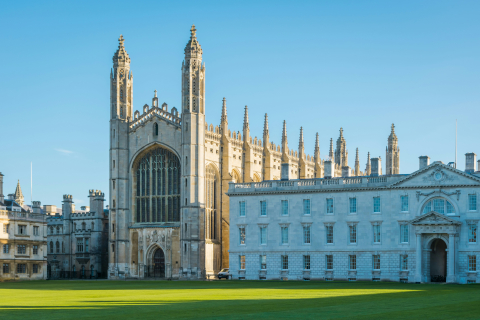
The 25th BIOECON conference was held at Kings College Cambridge between the 4th and 6th of September. The conference celebrated 25 years of conferences on biodiversity economics and conservation since the birth of the BIOECON network from an EU funded…
Ben Groom is a member of the scientific committee for the ENVECON conference, and presented in work on biodiversity metrics a the 2024 conference at the Royal Society. The DC chair also provided sponsorship.
Ben Groom is the co-chair of the BIOECON network along with Andreas Kontoleon (Cambridge) and Martin Quaas (Leipzig) . BIOECON covers a broad range of topics within the umbrella of biodiversity economics and the sustainable development goals, including: marine and…
BIOECON XXIII was of interest to both researchers and policymakers working on issues associated with finance and economics and their impact on biodiversity. It covered a broad range of topics within the umbrella of biodiversity economics and finance including: the…
BIOECON covers a broad range of topics within the umbrella of biodiversity economics and the sustainable development goals, including: marine and ocean economics, the role of biodiversity and ecosystem services in economic development, plant genetic resources and food security issues,…